
 |
| Source: Nane |
Saint John (don´t get confused with Saint John´s in Newfoundland) is said to be Canada´s oldest city, let,s talk a bit about its
History
Saint John became a leading industrial centre in the nineteenth century, especially due to its shipbuilding trade. The city quickly grew, with a big influx of immigrants during the Irish famine of the 1840’s, adding ‘Canada’s most Irish City’ to its list of names.
In 1877, there was a Big Fire that almost devastated the whole city. At that time, most of the houses were made with wooden structures, so the fire spread out quicky and it destroyed over 80 hectares.
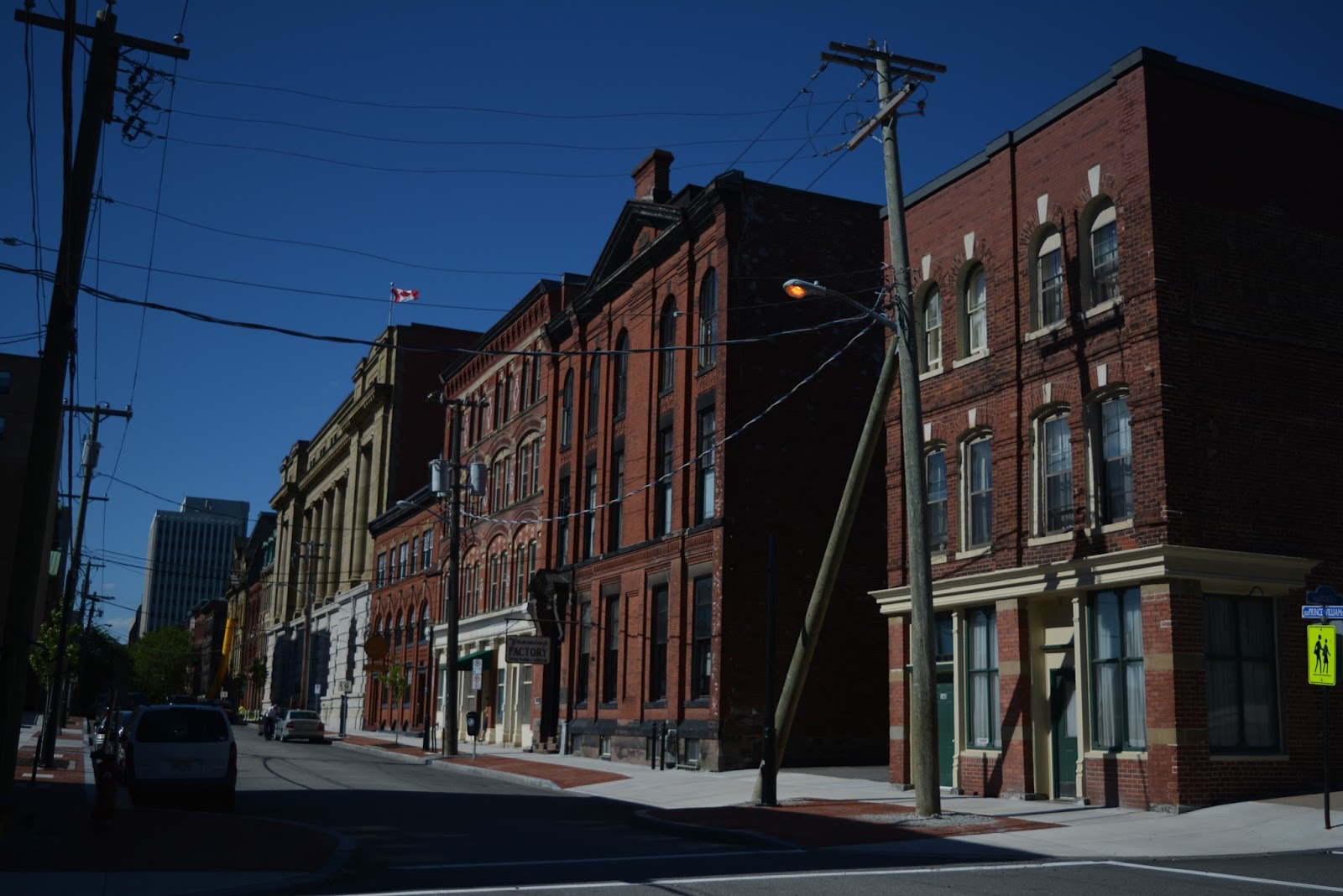
Architects from Chicago and Boston, came here to build new houses accordingly with the ones they had in their cities (made of brick and stone). That's how uptown Saint John came to have the largest and richest collection of turn-of-the-century architecture in all of Canada: A unique heritage of Victorian housing.

 |
 |
| Source: Nane |
Saint John is the biggest city of the province of New Brunswick. It is situated in the south-central portion of the province, by the sea, and surrounded by rivers:
- Saint John river has 400 km (250 mi.) of water, stretching from Edmundston in the north to the Reversing Rapids in the south.
- Kennebecasis River runs for approximately 95 kilometres
The harbour is home to a terminal for cruise ships as well as being a fairly busy home for various container ships.
In Saint John the height difference from low to high tide is approximately 8 metres (28 ft) due to the funnelling effect of the Bay of Fundy as it narrows. The Reversing Falls in Saint John, an area of strong rapids, provides one example of the power of these tides; at every high tide, ocean water is pushed through a narrow gorge in the middle of the city and forces the Saint John River to reverse its flow for several hours. It is a unique phenomenon.
Buildings:
We would bring your attention to:
We would bring your attention to:
 |
| Source: www.tourismnewbrunswick.ca |
The City Market. Canada´s oldest continuing farmer´s market. Its roof reflects the shipbuilding past, resembling a ship´s inverted hull. It is the epicenter of the city, where you can find fresh groceries, places to have lunch, artists selling their products, crafts,...
Saint John Free Public Library: Big, Complete, offers lots of programs, free computer access and the facilities are amazing.
Germain St. This street is the best example of the Victorian buildings we were talking about earlier. And it has several churches.
The Imperial Theatre. It’s worth the visit just to see its carefully constructed plaster moldings and beautiful ceiling. Give them a call, and you can even arrange for a behind the scenes tour.
Boardwalk: Located in the heart of Uptown Saint John, those pubs host free festivals and events each and everyday all summer long.
The principal buildings are connected by an easily accesible pedway system. So, if it is really cold, raining or snowing, you won´t have to go outside!
Saint John Free Public Library: Big, Complete, offers lots of programs, free computer access and the facilities are amazing.
 |
| Source: Nane |
 |
| Source: Nane |
The Imperial Theatre. It’s worth the visit just to see its carefully constructed plaster moldings and beautiful ceiling. Give them a call, and you can even arrange for a behind the scenes tour.
 |
| Source: http://discoversaintjohn.com |
 |
| Source: Nane |
The principal buildings are connected by an easily accesible pedway system. So, if it is really cold, raining or snowing, you won´t have to go outside!
 |
| Source: Nane |
Museums:
New Brunswick Museum: You can see a full size whale and a mastodon.
Other museums: Saint John Jewish Historical Museum, St John Firefighters´Museum, St John Police Museum...
Parks:
King´s Square: Nice Park in the middle of town. Lots of places to sit, shady, and great place to people watch.
Rockwood Park. It has more than 55 trails, 13 manmade lakes and you can hike, fish, boat, climb, golf, mountain bike, horsebak ride...or just enjoy the nature.
Irving Nature Park. It is s a 600-acre peninsula of volcanic rock and forest, between the open sea and a wide extension of tidal salt marsh. Home to many types of migratory and marine birds, the park offers walking trails and amazing views of this precious ecosystem. The park is a Bay of Fundy “Recommended Experience” and is provincially designated a “Top 10” attraction

 |
Rockwood Park.  |
Irving Nature Park. It is s a 600-acre peninsula of volcanic rock and forest, between the open sea and a wide extension of tidal salt marsh. Home to many types of migratory and marine birds, the park offers walking trails and amazing views of this precious ecosystem. The park is a Bay of Fundy “Recommended Experience” and is provincially designated a “Top 10” attraction
Saint John is one hour drive from the US border at Calais, Maine, 8 hours drive from Boston, Massachusetts. 7 hours drive from Quebec City, Quebec and 9,5 hours drive from Montreal, Quebec.
Want to come to visit us?
Want to come to visit us?

