Showing posts with label TRAVEL. Show all posts

Thursday, August 27, 2015

Intercâmbio no Canadá....


https://youtu.be/KuzTMeRvq7k

Vídeo autorizado pelo Allan Rodrigues 
(Automação Industrial no Brasil, intercâmbio em Industrial Control Technology pelo  Ciências sem Fronteiras no Canadá) 


Nos últimos 2 anos tive o prazer de conhecer pessoas especiais que trouxeram um pouca da cultura e alegria brasileira de volta ao meu dia-a-dia.

De uma hora para outra passamos de 3 brasileiros vivendo em Saint John, Canadá  para quase 20. Eles vieram fazer o intercâmbio do Ciências sem Fronteiras. Para alguns, tenho certeza que a vinda para cá mudou suas vidas 360 C, para outros, acredito que abriram os olhos para oportunidades  profissionais.

Me senti meio tia/prima deles, pela diferença de idade. Só posso dizer à todos que para mim, o carinho que tenho por vocês foi, é e sempre será real. Estaremos aqui quando quizerem passar férias. :0)

Eu realmente acredito que vocês possam fazer o Brasil crescer com suas experiências vividas aqui.


Tuesday, August 18, 2015

Le Pays de la Sagouine


If you are visiting Bouctouche (NB), and want to discover more about the Acadian culture, check out the "Le Pays de la Sagouine". It is a reproduction of a fishing village novel, as an act, they will explain how do they live. There is also french live band.


Friday, July 3, 2015

Come to our city, Saint John!

Source: Nane

We can´t wait to share "our" city with you. Are you ready?

Saint John (don´t get confused with Saint John´s in Newfoundland) is said to be Canada´s oldest city, let,s talk a bit about its

History

Saint John became a leading industrial centre in the nineteenth century, especially due to its shipbuilding trade.  The city quickly grew, with a big  influx of immigrants  during the Irish famine of the 1840’s, adding ‘Canada’s most Irish City’ to its list of names.

In 1877, there was a Big Fire that almost devastated the whole city. At that time, most of the houses were made with wooden structures, so the fire spread out quicky and it destroyed over 80 hectares. 
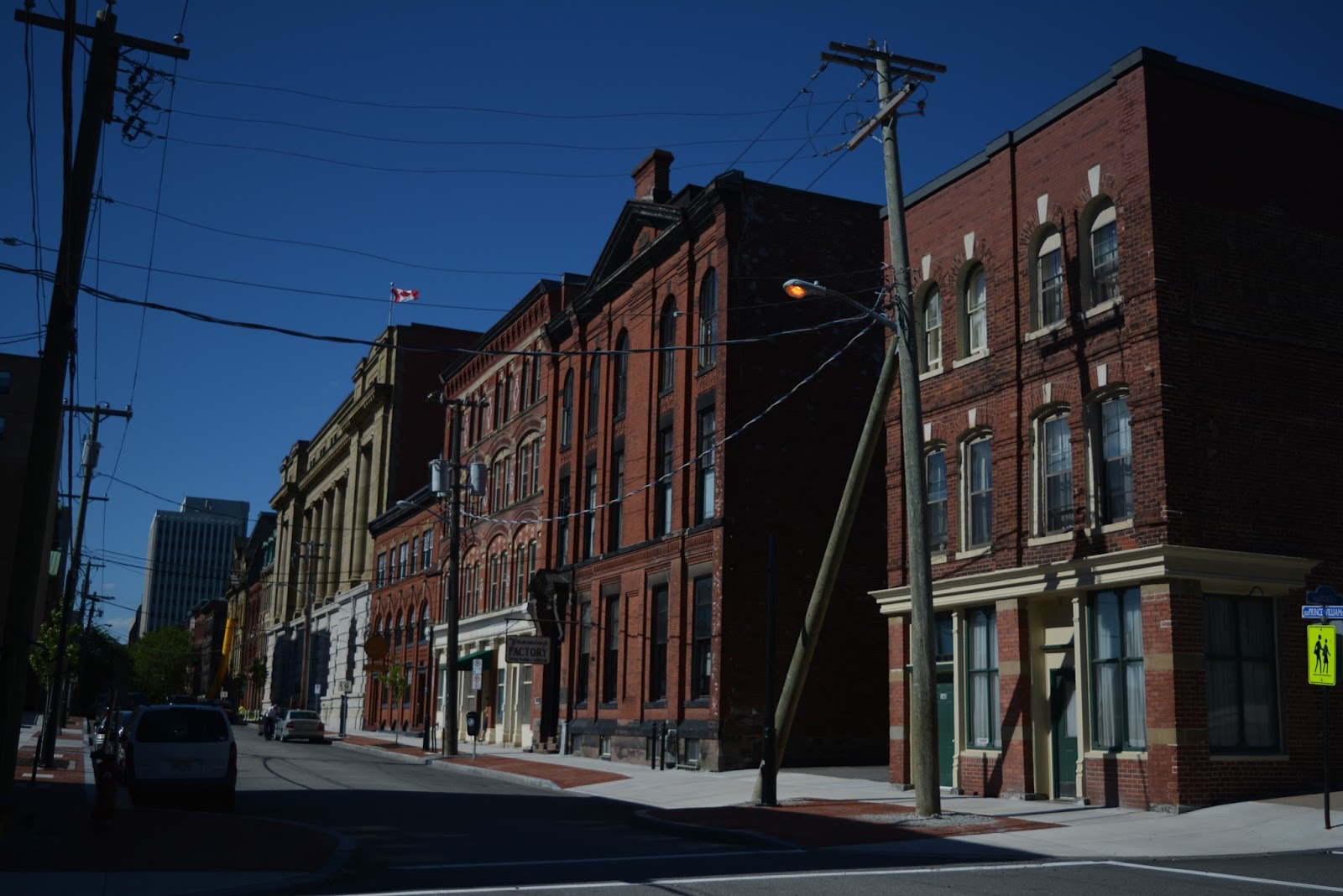
Architects from Chicago and Boston, came here to build new houses accordingly with the ones they had in their cities (made of brick and stone). That's how uptown Saint John came to have the largest and richest collection of turn-of-the-century architecture in all of Canada: A unique heritage of Victorian housing.

Source: Nane
Geography
Saint John is the biggest city of the province of New Brunswick. It is situated in the south-central portion of the province, by the sea, and surrounded by rivers: 

  • Saint John river has 400 km (250 mi.) of water, stretching from Edmundston in the north to the Reversing Rapids in the south. 
  • Kennebecasis River   runs for approximately 95 kilometres
The harbour is home to a terminal for cruise ships as well as being a fairly busy home for various container ships.

In Saint John the height difference from low to high tide is approximately 8 metres (28 ft) due to the funnelling effect of the Bay of Fundy as it narrows. The Reversing Falls in Saint John, an area of strong rapids, provides one example of the power of these tides; at every high tide, ocean water is pushed through a narrow gorge in the middle of the city and forces the Saint John River to reverse its flow for several hours. It is a unique phenomenon.

Buildings:
We would bring your attention to:
Source: www.tourismnewbrunswick.ca
The  City Market. Canada´s oldest continuing farmer´s market. Its roof reflects the shipbuilding past, resembling a ship´s inverted hull. It is the epicenter of the city, where you can find fresh groceries, places to have lunch, artists selling their products, crafts,...

Saint John Free Public Library: Big, Complete, offers lots of programs, free computer access and the facilities are amazing.
Source: Nane

Germain StThis street is the best example of the Victorian buildings we were talking about earlier. And it has several churches.
Source: Nane


The Imperial Theatre. It’s worth the visit just to see its carefully constructed plaster moldings and beautiful ceiling. Give them a call, and you can even arrange for a behind the scenes tour.


Source: http://discoversaintjohn.com


Boardwalk: Located in the heart of Uptown Saint John, those pubs host free festivals and events each and everyday all summer long.
Source: Nane

The principal buildings are connected by an easily accesible pedway system. So, if it is really cold, raining or snowing, you won´t have to go outside!
Source: Nane

Museums:
New Brunswick Museum: You can see a full size whale and a mastodon.
Other museums: Saint John Jewish Historical Museum, St John Firefighters´Museum, St John Police Museum...

Parks:
King´s Square: Nice Park in the middle of town. Lots of places to sit, shady, and great place to people watch.

Rockwood Park. It has more than 55 trails, 13 manmade lakes and you can hike, fish, boat, climb, golf, mountain bike, horsebak ride...or just enjoy the nature.
Rockwood Park.
Source: Nane

Irving Nature Park. It is s a 600-acre peninsula of volcanic rock and forest,  between the open sea and a wide extension of tidal salt marsh.  Home to many types of migratory and marine birds, the park offers  walking trails and amazing views of this precious ecosystem. The park is a Bay of Fundy “Recommended Experience” and is provincially designated a “Top 10” attraction


Saint John is one hour drive from the US border at Calais, Maine, 8 hours drive from Boston, Massachusetts. 7 hours drive from Quebec City, Quebec and 9,5 hours drive from Montreal, Quebec.

Want to come to visit us?

Sunday, June 21, 2015

Out and About in Atlantic Canada. Things to do in summer time


source: brandft.co.uk
What can we do in Summer Time in Atlantic Canada?
Whether you are thinking about moving here, you are on vacation or just visiting for a while, here there is a list of some of the things  you can do to enjoy summer time!


For children

During the summer holidays, many parents in Canada send their children to "Summer Camps". There are many types of summer camps, where children and youth can take part in activities such as sports, music, art, religious instruction, etc. Some operate just during the day and others offer the opportunity for children to stay overnight for several days or weeks.
In our city, there are two organizations  that arrange Summer Camps:
  • YMCA: http://www.saintjohny.com/programs/camps/day-camps/
  • SJMNRC: http://www.sjmnrc.ca/youth-program.html

For everyone:


Stonehammer Geopark. Guides share where you can climb volcanic rocks, paddle an ice age river and much more!. Tlf 1-866-672-0770
New Brunswick MuseumExamine real whales bones and shipbuilding history and artworks.


Source:http://www.tourismnewbrunswick.ca
But if you want to watch real whales, go to Saint Andrews/ Gran Mannan Island, where you will find the best tours.Whale-watching  excursions bring  visitors out to sea, where you can see these majestic marine animals, harbour seals and grey seals and other ocean life in their natural habitat.
The best known companies are:
  • Tall Ship Whale Adventures. Jolly Breeze of St. Andrews. Tlf 1-866-529-8116
  • Fundy Tide Runners Whale watching and Nature Tours Inc (by Zodiac).Tlf 1-506-529-4481
  • Island Quest Marine. Tlf 1-888-252-9111
  • St Andrews Ocean Adventures. Tlf 1-506-529-4306
  • Quoddy Link Marine Inc: ( by catamaran). Tlf: 1-877-688-2600
  • Capt Riddle´s Sea-Going Adventures (Deer and Campobello  Island)1-877-finback(346-2225)
  • Whales-n-Sails Adventure (Grand Manan). tlf 1-888-994-4044
  • Sea Watch Tours (Grand Manan). tlf: 1-877-662-8552

Splash into fun at any of our beaches perfect for swimming (we have over 50) or lean back in your chair or have a nice walk, what you prefeer. Build sandcastles, play beach volleyball and enjoy the serenity of days spent by the sea. 
Explore our sand dunes and Discovery Beaches

Peggy´s Cove. Source: Nane
Lighthouses: Some of them are active, some are not, but all of them are beautiful!. What about spending some time visiting lighthouses? One of the most famous is the one in Peggy´s Cove (see above) but there are at least 85 lighthouses just in New Brunswick. In this website, you can find more information about each one:
http://www.lighthousefriends.com/pull-state.asp?state=NB


Covered BridgesNew Brunswick has 60 covered bridges.The Hartland Covered Bridge is probably the best known, but there are many others that were built around the same time.


Tidal bore in Moncton. A natural phenomenon caused by the surging Bay of Fundy tides (the highest in the world), the Tidal Bore activity occurs twice daily. The higher waters in the bay cause the water in the Petitcodiac River to roll back upstream in one wave, which can range in height from 3 cm (1 in.) to 60 cm (24 in.).Visit the local Visitor Information Centre located beside Bore Park in downtown Moncton for Tidal Bore arrival times.


Source: www.photosearch.com
Drive-In cinema in Sussex: Like in the movies, you can watch a film comfortably seated in your car and listening to it from your car radio. Starting the 19th of June they will open friday saturday and sunday nights.


Source:tourismnewbrunswick.ca

Shediac Lobster Festival(July, 8th-12th). Come to the Lobster Capital of the World!. Every night 10 volunteers are chosen from the crowd to break down and eat three lobsters-only- with their hands and as fast as they can. Come and try your luck at this festival.


Dragon Boat Festivalthe 29th of August, in Renforth, Rothesay. From 8am to 5pm. It is a fundraising project of St. Joseph's Hospital Foundation and its  mission  is to raise funds that help meet the needs of St. Joseph's Hospital for equipment, research and education. It is really fun!

Source: Nane

Balloon Festival in Sussex: This year the festival will be celebrated the 11-12-13th of September. 30 Hot Air Balloons fly twice daily. If you have never seen this spectacle, it is worthy.

Source; Nane

Music Festivals and EntertaimentNew Brunswick’s Festival Place in Saint John provides free Arts & Culture programming each and every day from the Summer Solstice in June until Labour Day in September.
Live Entertainment – Every Sunday (June 21 to August 23).
But If any music festival is well known here, it is the Cavendish Beach Music Festival and the Charlottetown Festival, both of them in Prince Edward Island. Clap, dance and laught as the lively music and friendly locals will take you to the time of your life.


Spotlight on the Acadie. Visit Monument Lefebvre National Historic Site. You will be able to truly understand the story of the Acadian people.
                                                                    

Source; Nane


Bay of Fundy Coastal DriveHome to the world's highest tides, you can visit  the Fundy National Park and the Hopewell Rocks, and kayak around them. We will talk about these two treasures in next posts.


And, to end with this post, what a better way than sharing a sweet tip? You should "Discover the Wonder of Chocolate". St. Stephen is home to Ganong Bros Ltd, Canada´s oldest candy company, and you can visit the Chocolate Museum. Located in what used to be the original Ganong candy factory, The Chocolate Museum offers an interactive way to learn about candy making in St. Stephen

Are you ready to enjoy these events? Ready to get started?


Wednesday, June 17, 2015

Important Things to do before and after you come to Canada


Welcome to Canada: What you should know
Source:www.gic.gc.ca

If you are thinking about coming to Canada, it is best to be as prepared as possible.

Every newcomer's situation is different, so the lists we put here will  provide only an indication of what you may need to do at different stages.
Some of these documents may not be required immediately, but it is better to bring all your official documents with you in case you need them in the future. It is usually more difficult to obtain them after you have left your country.

BEFORE you arrive in Canada:


1. Collect and bring to Canada all official documents belonging to you and the family members who are immigrating with you.
Source: www.qc.cuny.edu
You should prepare:
  • birth certificate
  • passport
  • marriage or divorce certificate, death certificate for a deceased spouse
  • adoption records for adopted children
  • educational diplomas and Certificates. Transcripts that list the courses you took to obtain a degree or certificate. 
  • official vaccination records
  • medical records (test results, x-rays, allergies, prescriptions... ) and dental records
  • driver's licence and/or International Driving Permit 
If the original documents are not in English or Frech, (Canada's official languages) you will need to obtain Certified translations. Here in Atlantic Canada, even if it is a bilingual province, it is most useful to translate the documents into English.
When presenting your documents to Canadian Officials, always provide the original, the certified translation and the name and contact information of the translation agency.

2. Make an effort to improve your English or French. Communicaton skills may be the most important tool you can possess to setle successfully in Canada and find a good job .

3. Plan where you will stay during your first days in Canada. 

4. Prepare yourself to find employment in Canada. Obtain letters of reference from your past  employers, learn how to search and apply for jobs in Canada.
Find out if your occupation is regulated or unregulated. You may need to get your credentials recognized to find work: (http://credentials.gc.ca/recognition/why/licensing-requirements-regulated.asp)

5. Learn about the education system in Canada. Take note of the deadlines for applying and registering at schools, colleges and Universities.

6. Learn more about the province and the city where you will settle. Choose the city where you will live and understand how  much it cost to live there (http://www.cig.ca/english/newcomers/before-cost.asp)

7 .Find out if you need a Temporary Resident Visa to enter Canada. (http://www.cic.gc.ca/english/visit/visas.asp)

8. Make sure you know what you can and cannot bring to Canada. (http//www.cic.gc.ca/english/newcomers/before-goods-what,asp)


AFTER arriving:
Source: http://galleryhip.com
In your first few weeks you will need to:
  • Learn the sources of information to help you meet your needs:You can find contact information for inmigrant-serving organizations across Canada at:  www.cic.gc.ca/english/newcomers/map/services.asp                   
          (We  recommend you :Saint John Multicultural and Newcomers Resource Centre Inc.)
  • Exchange your money for Canadian currency and  open a Canadian Bank Account.
  • Find temporary accommodation
  • Have some identification (ID) with you
  • Apply for a government health insurance card 
  • Apply for a Social Insurance Number (SIN). You can not work in Canada without a SIN . And it is needed to receive goverment benefits.
  • Register your children in school
  • Get a telephone card or a contract with a phone company
  • Get a map of the area and find out about transportation in your area
  • Memorize the national emergency telephone number: 911. If you experience a medical or other type of emergency, do not hesitate to call for help. 

In your first few months:
  • search for a home to rent or buy.
  • get a family doctor or health centre where you can go for your medical needs. 
  • have your children inmunized
  • look for a job
  • try to make friends
  • know where the Language Instruction for Newcomers to Canada (LINC) assessment centre is in your community and register for language classes
  • apply for Canada Child Tax Benefits (call 1-800-387-1193)
  • know if you can apply for the GST/HST Credit ( call 1-800-959-1953 for more information)

In your first year:
  • get a valid driver's licence if you plan to drive in Canada
  • if your first language is not English or French, practice and improve your language skills
  • register for adult continuing education classes
  • participate in community activities
  • understand your rights and responsibilities under Canadian law
  • know that you can apply for Canadian citizenship after living in Canada several years
The Citizenship and Immigration Canada (CIC) website can be found at www.cic.gc.ca and it provides general information about immigration and citizenship programs and services, information about your application, information kits easy to download and help with fee calculations.
You can also call them: 1-888-242-2100 


Monday, June 8, 2015

Out and About in Atlantic Canada. Things to do in NB in Spring time


Source: Nane. Kingsbrae Garden. Saint Andrews

Spring is time of renewal and it is time to try new things

Here is a list of activities  you can enjoy in our area, and most of them are free!:

Nature Walks. Take a hike. There are two  National and nine Provincial Parks in our province, New Brunswick: Fundy, Kouchibouguac, Mactaquac, Sugarloaf, Mount Carleton, Herring Cove...
Take a look to these websites:
  • http://www.pc.gc.ca/pn-np/nb/fundy/index.aspx
  • http://www.tourismnewbrunswick.ca/Products/K/KouchibouguacNationalPark.aspx
  • http://www.tourismnewbrunswick.ca/Products/M/Mactaquac-Provincial-Park.aspx
Source: Nane. Hopewell Rocks
If you don´t like parks, you can walk on the beach. New River Beach and Parlee Beach are the most famous in New Brunswick, but there are sandy beaches all over the province.

Source; Nane. Parlee Beach

Or, going further, you can visit Nova Scotia, and/or Edward Prince Island. We will talk about the parks,about the scenic drives and all the nearby places you can visit in other post.

Have a picnic at the park. Wherever you are, there is always a nearby park  where you can have a picnic. In Saint John, we have two beautiful big parks: Rockwood and Irving Nature Park
And once you have eaten something and recovered energies, fun outdoor adventure is there: freshwater swimming, canoeing, camping horses, golf and more!  

Plant something green. If you were a Canadian, you would plant some flowers in the garden, especially tulips, but you can plant whatever you want, even in a pot, why not?:) lettuces, tomatoes, aromatic plants... 

Visit any of the Farmer Markets scattered around the area. You can buy there fresh vegetables, local Organic products, international foods, dairy products, they usually have a bakery....
Source:www.wellandgood.com

Steam/Cook fiddleheads. I am sure you have never heard about Fiddleheads. They are the young coiled fronds of the ostrich fern and Canadians say that they are delicious. You have to be careful when cooking them because they can be poisonous.The Goverment of Canada gives useful and safety tips in this page: http://healthycanadians.gc.ca/eating-nutrition/safety-salubrite/fruits-vegetables-legumes-fruits/fiddlehead-fougere-eng.php
Try a new recipe!

Barbacue in the backyard. Essential if you want to fit in.
Paddle a river or the sea kayaking. It is the ideal vantage point for getting close to birds and other wildlife. Or just for fun. There are several companies in Saint John where you can rent kayaks

Visit a farm to see the animals. You can visit the zoo in your city, a farm, or just pay more attention to the animals around you. In the spring, many animals and birds have their young, taking advantage of the abundant food and warm days. 
Source: Nane. Kingsbrae garden. Saint Andrews

Feel the sun on your skin. Canadians go bare legged when spring comes.. we are not as brave as they are, but it is nice to feel the sun on your skin after so many months with your long sleeves!

Sit outside a cafe. Now that the temperatures are warmer.. it is time to enjoy a cup of coffee or some beers with friends!

Take advantage of your yard, your deck or any other place outdoors and start making craft activities. Take  paper, markers, crayons, scissors and glue and let Renata teach you how to make cute decorations. For more information, go to her webside: http://www.noivaprendada.com.br/

Plan your summer vacation.

Indoors. If you prefer staying indoors,
  • you can organize your winter photos. 
  • work out in the gym or swim in the local indoor swimming pool.
  • arrange a night of bowling or skating or going to the cinema with friends.
  • buy tickets to a  basketball game and encourage your favorite team.
  • subscribe to a reading club in your Library.
  • sign up for a class of one week
  • get involved with a voluntary activity in your community
And not as interesting as the previous ones, but spring is time to organize your closet.


Source:yourstylesavior.com
Get rid of the clothes you don´t wear. Donate them and you will do a favour to somebody who could need and use them. 
Wash and store your winter clothes. 
With these two steps, you will have more space in your wardrobe and you will find your clothes more easily each morning. 


Cheers and Enjoy!


Formas de vir para Canadá: Visto de Estudante (Universidade e College)


Dentre muitas maneiras de vir para o Canadá, uma das mais utilizadas é através do visto de estudante.
confira nas linhas a seguir algumas informações sobre essa modalidade tão cobiçada.

Um pouco da minha história:
Quando decidirmos vir para cá eu e meu marido analisamos várias possibilidades e dentre elas, surgiu a possibilidade da vinda como estudante de College (que na época era a mais fácil, barata, rápida e menos burocrática). Como meu marido veio como estudante e por sermos casados, eu automaticamente ganhei o Work Permit (Visto de trabalho).

Porque escolher esse método: 
Através da nossa experiência, posso dizer que é uma ótima maneira de se ter uma primeira impressão do país. Se você ainda tem dúvidas se quer imigrar de vez, é uma excelente oportunidade para se acostumar com a cultura, clima,  estilo de vida e o mercado de trabalho, em vista que uma vez como estudante, de college ou universidade você passará no mínimo um 1 ano e até 5 anos (dependendo do curso ou especialização que deseje fazer) por aqui e terá oportunidade e passar por muitas experiências que ajudarão a tirar suas próprias conclusões sobre o País.
Uma vez aqui, suas chances de entrar com pedido de imigração por programas provinciais  ou após sua graduação você pode solicitar um visto de trabalho (Post Grad. work Permit), com isso suas chances são maiores.
Na pior das hipóteses você voltará  ao Brasil com um upgrade no seu currículo e com fluência em inglês.

Porque não escolher esse método: 
Caso você não tenha um bom nível de inglês, esse não é o meio mas indicado para você. Uma vez que todas as instituições de ensino solicitam comprovação de proficiência na língua inglesa (ou francesa dependendo da província) e isso é comprovado através dos testes de proficiência como TOEFL, IELTS.
Histórico escolar, carta de indicação de professores, diplomas e certificados todos esses documentos serão solicitados pelas instituições e todos devem ser traduzidos por tradutor juramentado e enviados por correio.. tudo isso não sai barato!
Caso você não tenha uma reserva financeira, Bolsa de estudos ou alguém que te patrocine essa também não é a melhor das alternativas. Além de ter que comprovar renda suficiente para se sustentar durante o período de estudos, esse visto possui algumas restrições quanto ao permissão de trabalho (sua permissão ira depender da sua carga horária de estudos), pois uma vez que você veio como estudante, sua prioridade é estudar!

Para mais informações sobre esse assunto acesse os links abaixo:
Como solicitar visto de estudante http://www.cic.gc.ca/english/study/study.asp
Lista de instituições legalizadas pelo governo http://www.cic.gc.ca/english/study/study-institutions-list.asp
Tipos visto de estudante para trabalhar enquanto estuda: http://www.cic.gc.ca/english/study/study-changes.asp

Espero que tenha esclarecido um pouco, essa opção de vinda para o Canadá.

Dúvidas, sugestões, deixe seu comentário aqui abaixo ;)


Monday, June 1, 2015

Escolhendo onde morar no Canadá - West to East Coast

sil´s archive

A população canadense é concentrada a menos de 200km da fronteira com USA, isso é devido à temperaturas extremas ao norte.  Ao escolher uma região para se morar, é bom levar em consideração  fatores como: clima, vida social, possibilidade de emprego e etc.. De uma forma mais ampla,  eu sempre descrevo:


Pacific Canada -  British Columbia - melhor lugar para viver para quem quiser fugir do frio e da neve, porém chove muitooo. Vancouver com uma arquitetura moderna é um lugar caríssimo de morar, mas belíssimo.

Prairies - Alberta / Saskatchewan / Manitoba - Região super fria, chegando aos -40C no inverno, mas com uns dias quentes devido aos ventos Chinook. Booom do oléo e gás, não muito agora com a crise, mas é onde as pessoas fazem $$$$$$$$$.

Central Canada - Ontario / Quebec - Com temperatura um pouco mais amena,  a região é constituída por uma mistura de Metrópoles e sítios históricos. Embora sejam províncias enormes, as capitais e cidades turíticas estão relativamente à 2h de distância umas com as outras (Toronto, Ottawa, Montreal, Quebec City). Por ser mais multicultural e ter mais brasileiros imigrantes nesta região, acho mais fácil achar emprego. 

Maritimes - New Brunswick (onde moro) / Prince Edward Island / Nova Scotia e se incluirmos Newfoundland and Labrador formamos a região Atlantic Canada. Aqui temos menos frio (ohhh -25C) e por causa do Bay of Fundy teoricamente teriamos menos neve, mas nos últimos 2 anos estamo a região está batendo recordes em acumulo de neve, se comparado com os últimos 50 anos. Vida de interior, as pessoas se comprimemtam na rua, vida super calma e segura. Muita natureza para ser contemplada, porén a oferta de emprego não é muito grande. Lado positivo, região mais BARATA de viver.

Northern Canada - Yukon / Northwest Territories / Nunavut - Acho que nem precisa comentar o fato do frio extremo …. aos ambiciosos é a forma de ficar rico a curto prazo, mas pagasse o preço de viver isolado ao resto do país. 


Wednesday, May 27, 2015

Why are we doing this?


Last week, having a cup of coffee at Tim Hortons...  wait a moment,... You haven´t heard about Tim Hortons? That means that you haven´t arrived to Canada yet!. Come with us!
As we were saying, we were talking about our experiences living in Canada, how different some of them were from the ones we had in our countries and how many people were asking us how to immigrate here. So, we decided to start this "canadaeasyguide".
We hope this guide will help you.
We will talk about the themes we are more concerned about or the ones we love, but you can tell us which one you  are interested in and we will try to write about it!